About HVSC
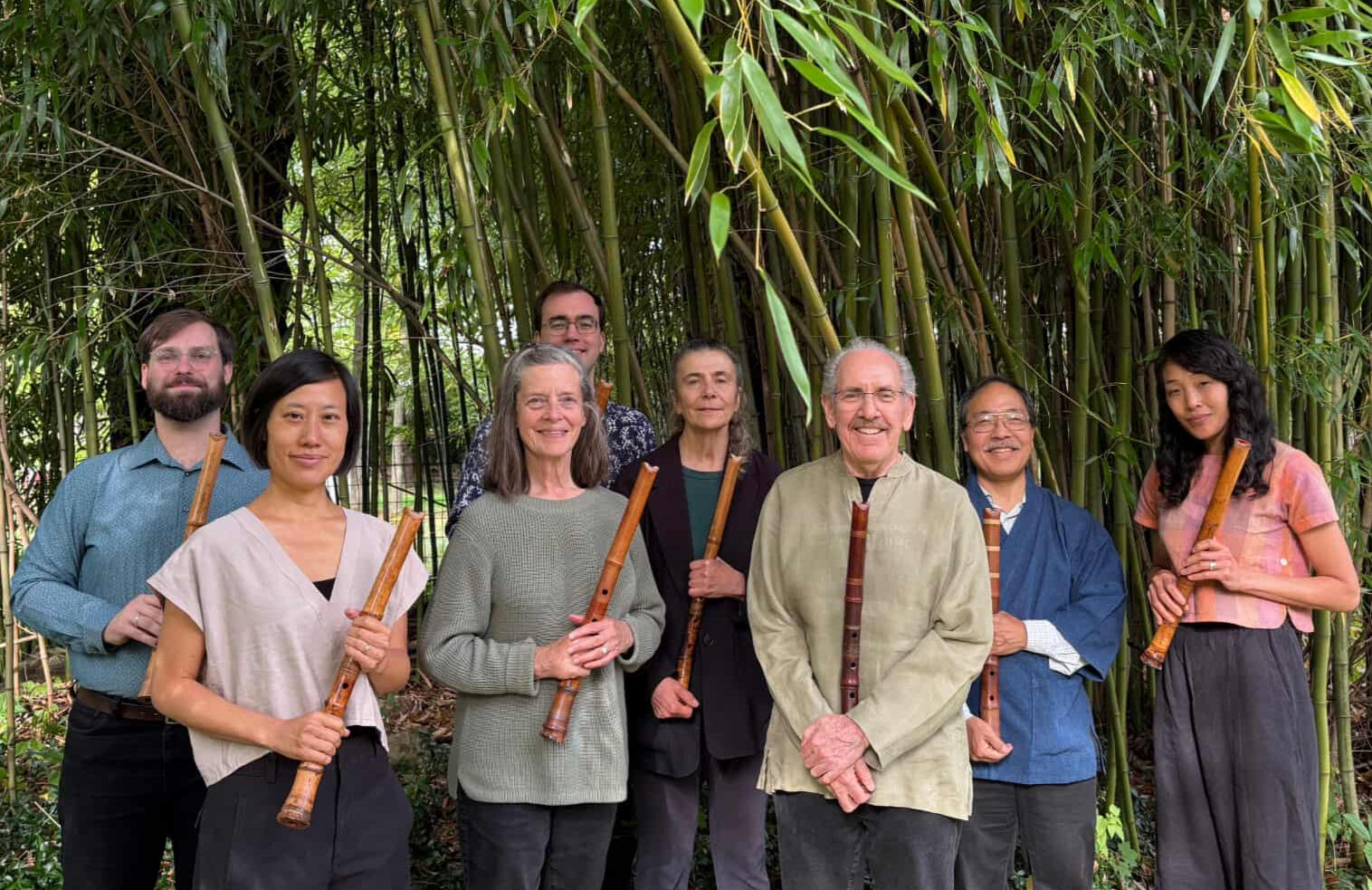
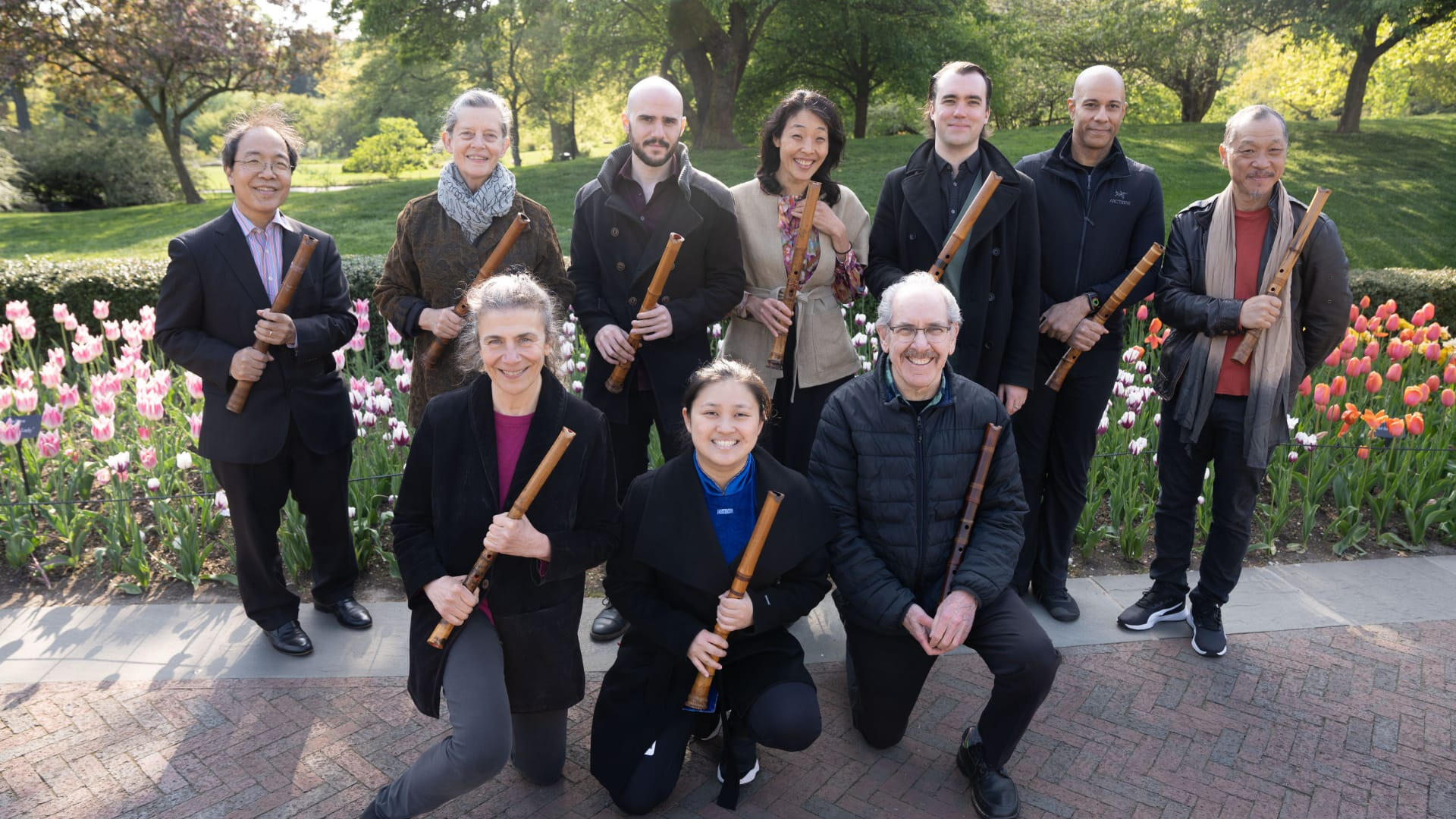
The Hudson Valley Shakuhachi Choir was formed in 2017 by Ralph Samuelson and Elizabeth Brown to explore the sonic possibilities arising from the instrument’s rich overtone texture expanded into a group setting. The choir consists of six to twelve players and the repertoire includes arrangements of traditional meditative solo pieces, min’yo (folk song), and new compositions created specifically for the ensemble; three of the group’s members have received Guggenheim Fellowships in composition.The choir’s schedule includes annual performances at Brooklyn Botanic Garden’s Hanami Nights and in Innisfree Gardens in the Hudson Valley, as part of Innisfree’s Gardens for Peace, an annual nationwide initiative in honor of the United Nations’ International Day of Peace. They have also performed at the Cathedral of St. John the Divine and in Basilica Hudson’s 24-hour Drone Festival.The shakuhachi is a vertical bamboo flute with a notched mouthpiece and five finger holes. It takes its name from the standard length of the instrument in traditional Japanese measuring units, 1 shaku 8 (hachi) sun. During the 17th, 18th, and early 19th centuries it was played by a sect of Buddhist monks as a form of spiritual practice, out of which developed a repertoire of solo pieces known as honkyoku (original/true music). It also joined the string instruments shamisen and koto (and voice) in the secular chamber ensemble, sankyoku (three instruments). Beginning in the early 20th century, after the introduction of European music to Japan, an ever-expanding repertoire of modern music was composed for the shakuhachi.The shakuhachi arrived in the United States with immigrants from Japan in the 19th century, but it was from the 1960s onward that the flute and its music began to spread significantly in this country and around the world. Today the shakuhachi is no longer specific to a particular country or historic era; it is very much a part of our contemporary, globalized musical landscape.

Events
**Saturday, September 12, 2026, Japanese Hill and Pond Garden, Brooklyn Botanic Garden
The Hudson Valley Shakuhachi Choir will perform as part of the North American Japanese Garden Association's annual Gardens for Peace project. Included with Garden admission, no registration required. Tickets for admission on the 12th are available now.
Click here for more information and to purchase tickets**Sunday September 27, 2026 5:00-6:00 PM, innisfree Garden, Millbrook, NY
Music for Peace
The Hudson Valley Shakuhachi Choir will performa in Innisfree's annual Gardens for Peace program. Tickets available soon.
Click here for more information